Case study · Desktop / Game
Memory Game (Electron)
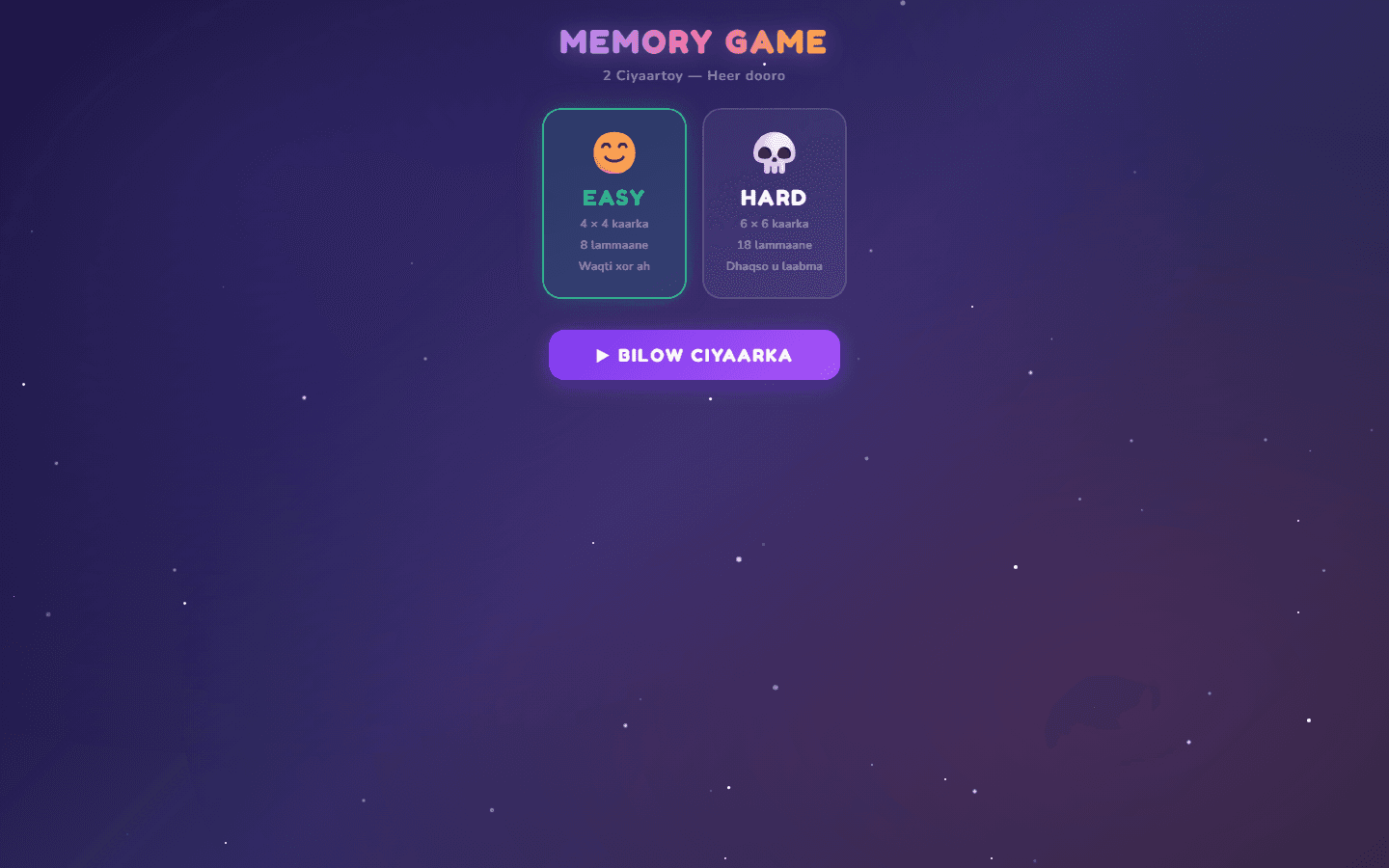
A two-player memory card game with Easy/Hard modes — web preview and desktop-ready Electron packaging.
ReactElectronJavaScript
- Role
- Frontend Engineer — game loop, modes, and desktop packaging
- Timeframe
- 2024–2025
Overview
Memory Game is a small but complete product: turn-based play, difficulty modes, and a desktop path via Electron. It demonstrates interaction design, state for game rounds, and shipping beyond a single web page.
Problem
- A memory game needs crisp feedback for flips, matches, turns, and win states.
- Easy vs Hard must change the experience meaningfully, not just a label.
- Desktop packaging (Electron) should reuse the same React UI without rewriting the game.
Approach
- Built the core loop first: flip → compare → score/turn update → round end.
- Encoded difficulty as board size / complexity rather than cosmetic switches.
- Wrapped the React UI for Electron so web preview and desktop share one codebase.
- Published both a Vercel preview and a public GitHub repo for interview review.
Architecture
- React component tree for board, cards, and HUD.
- Local game state for turns, matched pairs, and mode settings.
- Electron shell for desktop distribution using the same front-end bundle.
- Static/web hosting for the browser demo used on the portfolio.
Outcomes
- A compact case study proving polish on interaction-heavy UI.
- Public code + live demo for fast recruiter verification.
- Evidence of packaging the same product for web and desktop.
Tradeoffs
- Scope stayed intentionally small — depth is in game feel, not backend services.
- Multiplayer networking was out of scope; local two-player keeps the loop reliable.